How to unlock success at careers fairs for employers
While it might seem that digital and online job applications are the new standard format, that is not 100% correct. The in-person careers fair is a great chance for prospective candidates to meet their potential future employer. This is why employers need to know how to unlock success when planning and executing an employment fair. Discover this guide from beginning to end to see how to best approach the job fair season and maximise success.
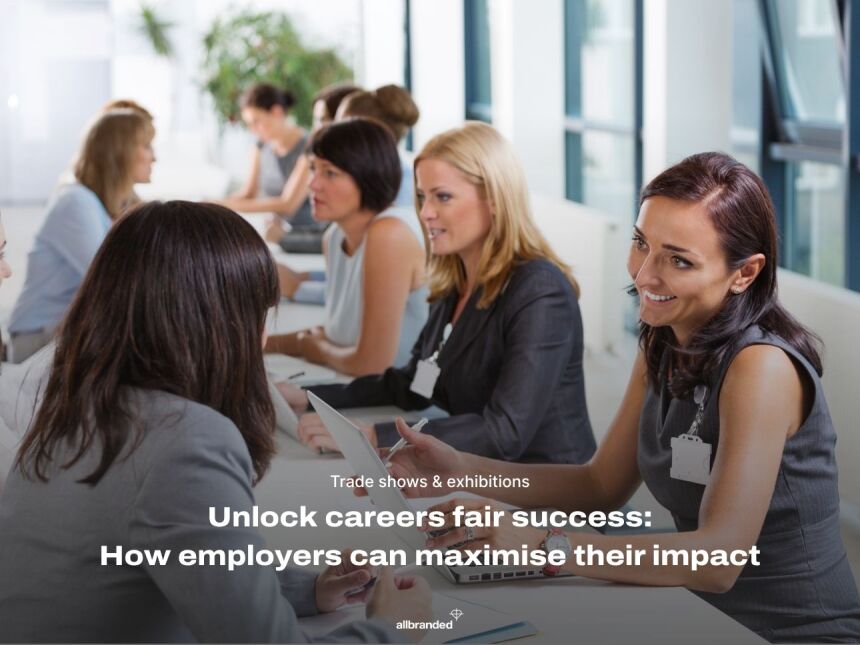
In a digital-first world, candidates can easily find information and apply for jobs online. Careers fairs may seem like relics of the past. However, they remain one of the most effective ways for employers to connect with high-quality talent in person.
Job fairs go beyond recruitment. These events and fairs offer a unique way for organisations to survey the market.
Success at a recruitment event does not happen by accident. It requires a blend of strategic planning and a welcoming atmosphere that makes candidates genuinely excited about a company.
Discover what to do at a job fair as an employer in easy steps from beginning to end. See how to navigate the recruitment process well. It also includes a practical step-by-step guide to help make the next exhibition a triumph.
10 tips for careers fair preparation & success
Organising a presence at a job fair is a complex task. Breaking the whole process into a clear timeline ensures everything runs smoothly. Following these expert steps helps transform a standard booth into a magnet for top-tier candidates. Learn how to prepare for a job fair as an employer during every stage of the planning and executing process.
I. Before the event
The secret to a successful day at an expo lies in the weeks leading up to it. Preparation serves as the foundation for a professional brand image.
Tip 1 - Create clear objectives
Before diving into logistics, a company must define what success looks like. Without a specific target, it is impossible to measure a return on investment. Common goals for a successful careers fair include:
- Hiring for immediate vacancies
- Building a talent pipeline for future roles
- Conducting market research on competitor benefits
- Increasing general brand awareness within a specific industry
Tip 2 - Start planning early and do research
Large events have many moving parts, many times including other departments too. Researching the expected attendee demographics is vital. This helps tailor the messaging.
Additionally, looking into trends for booth designs helps a brand stay relevant. Knowing which competitors will be nearby allows a team to prepare a strategy that helps them stand out in a crowded hall.
Tip 3 - Order promotional products
To leave a lasting physical reminder of a brand, offline marketing is essential. Branded giveaways encourage foot traffic and keep the company name on a candidate's desk long after the fair ends.
- Classic items: Items like branded lanyards and promotional ballpoint pens are always useful. While they might not be the most unique, they get the job done.
- More unique items: To make a bolder impression, businesses can consider unique promotional items that reflect their specific industry. Think outside the box with memorable products that deliver the WOW effect.
- Branding: It is important to ensure the logo and artwork are crisp and professional; a poorly designed logo can damage a brand's reputation. Avoid making small and overly complicated logos in favor of clear branding.
Discover the top 7 trade show giveaways that work perfectly for recruitment fairs as well.
II. Day of the employment fair
Once the event arrives, the focus shifts to execution and engagement. This is the moment to turn a strategic plan into a reality.
Tip 4 - Arrive early
Arriving early provides the necessary buffer to handle any logistical hiccups. A well-organised, attractive booth invites visitors more than a booth that staff hastily assemble as the doors open. Being ready for "early bird" candidates shows a level of professionalism that applicants find reassuring.
Tip 5 - Prepare an elevator speech
Candidates often ask about company culture, daily responsibilities, and benefits. Every team member at the booth should have a concise, engaging “elevator pitch.” This speech should be professional yet conversational, covering:
- What the business does and its core mission
- The specific opportunities currently available
- The perks and culture that make the workplace attractive
Tip 6 - Focus on presentation
The way promotional items are distributed is just as important as the items themselves. Instead of simply leaving a pile of branded notebooks on a table, businesses can create an experience. Hosting small interactive games, such as a prize wheel, can draw a crowd and break the ice with applicants. Having a fun background is great for candidates to take pictures with the promotional products they received.
These interactive games also bring more attention to the booth. More visits to the booth, the higher the chance of overall careers fair success.
Tip 7 - Gather candidate information
The primary goal is to maintain contact. To make this easy for everyone, digital trackers, or QR codes are far more efficient than paper forms. A quick scan lets candidates upload their details at once, right at the booth. This gives the recruitment team a clean, digital contact list by the next morning and saves time from sorting through hundreds of physical applications.
III. Follow up after the job fair
The work is not finished when the booth is packed away until next year. The post-event phase is where people solidify the most valuable connections. This is possibly one of the most important steps in the process and should never be skipped.
Tip 8 - Review the applications
While memories are still fresh, the team should review the CVs and notes gathered. Should any vital information be missing, it is crucial to collect that. Assessing candidates quickly helps companies remember key interactions and personal traits not shown on a standard application.
Tip 9 - Reach out to each candidate
In a world of automated "no-reply" emails, a personal touch goes a long way. Companies should aim to contact everyone who showed interest.
This can be done through an email, a hand-written letter, a job contract, or even a message on social media.
- Successful candidates: The team should outline the next steps in the interview process. Be sure to confirm a date for the next interview.
- Unsuccessful candidates: A polite thank-you note maintains a positive company reputation. However, make sure to still be personal so it does not seem generic and impersonal.
- Future prospects: If a candidate is impressive but does not fit a current role, tell them their details are kept for future openings. Make sure to follow any privacy and data protection guidelines.
💡Good candidates might not wait around for a company that never responds to them. Make a good impression and respond to top candidates quickly.
Tip 10 - Analyse performance
Finally, it is time to look back at the original objectives to fully understand the success of the careers fair. Evaluating whether the event met the goals is the best way to improve for the next fair. Whether it involves changing the booth layout or picking different promotional giveaways, these insights matter for future recruitment drives.
Learn how to convert high-intent leads with strong follow-up to discover even more helpful tips and tricks.
Job fair and careers fair FAQs
Now is the time to answer any more lingering questions. Here are additional tips from the most frequently asked questions. Discover questions from the employer perspective, but also questions for the students who are attending.
What is a careers fair?
A careers fair is a networking event where employers and job seekers meet face-to-face. Companies often use them for immediate interviewing. Employment fairs also serve as an information hub where businesses can showcase their values to a wide audience.
What should staff wear to a careers fair?
Staff should dress in a way that reflects the company brand. While traditional corporate roles might require formal attire, many modern startups opt for branded hoodies or polo shirts. Consistency is key, as a unified team helps the brand look established and approachable.
What should a company bring to a careers fair?
To make the biggest impact, a booth should be well-stocked with more than just flyers:
- Knowledgeable employees: Current staff are the best ambassadors for company culture.
- Product samples: If the company makes a physical product, having it on-site for demonstrations provides a great talking point.
- Engagement tools: Digital tablets for sign-ups and high-quality promotional swag keep the booth busy and the brand memorable.
With these strategies, an organisation can attend a careers fair with confidence. The team can leave with a list of talented new prospects.
How to prepare for a career fair as a student?
Before the event, here are ways students can best prepare for a recruitment event.
- Research employers - Look into which brands will be attending to better plan which booths to visit.
- Prepare questions - Once a list of which companies are attending, prepare a list of potential questions. Employment fairs are a great place to directly ask questions in person.
- Update their CV and LinkedIn - Having an upkept resume and job experience is crucial before an event.
- Refine the pitch - Have a short pitch or speech prepared, which includes work experience along with hard and soft skills. This pitch is a short introduction to the student applying.
What are tips for careers fairs for students?
When attending an event, here are are some important things to consider:
- Arrive early to make a good impression
- Dress professionally
- Network extensively to get the most out of the event
- Send a follow-up message or email after the event
- Make sure to complete and tasks or submit documents as promised
Should students bring their CV to a careers fair?
Yes, students should bring their CV to job fairs and recruitment events. This is the perfect place to directly submit a CV.