
.png)
.png)
Screen or DTF? Best t-shirt printing methods for 2026 explained
There are many printing methods available, especially for t-shirts and apparel. Choosing which method is best shouldn’t be the hardest part of the process. Learn more about each printing method to make sure the right one is chosen for a lasting branding opportunity.
While each method can work, there are some best practices to consider. To have the most professional look, consider each of the strengths and limitations before bulk ordering a large quantity.
Still can’t decide which method would work best? Then reach out to promotional product and branding experts to receive guidance.
Embroidery
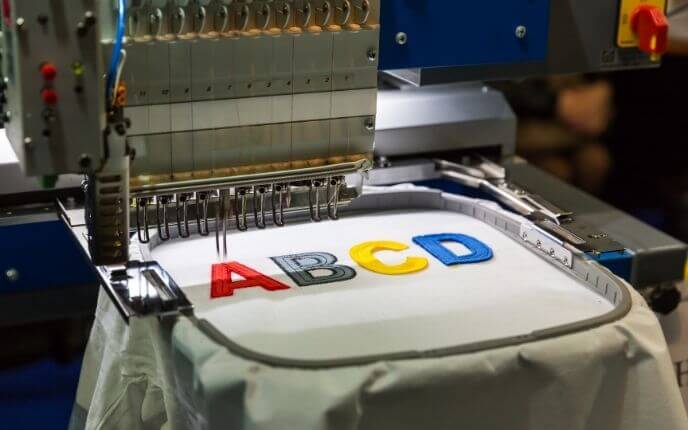
When choosing options for work uniforms or a more professional look, then consider choosing embroidery. When used, this branding method gives a 3D feel, leading to a clear design that is very long-lasting.
How it works
Unlike printing methods, embroidery is done through thread and needle. The needle follows the design outline to create a stitched logo. In the end, only thread is used to create a design.
🎨 Colour and design complexity
Colour options and design complexity is limited. Colour is limited to thread colours. Designs appear better the less complex they are.
🔗 Fabric compatibility
Works on most fabric, but the best results come from thicker fabrics.
Overall impressions
- Best for: A durable and professional look that does not involve any heat or pressing
- Limitations: A more costly option for limited thread colour options and simple designs
Sublimation
Get full coverage with this branding option. Sublimation is perfect for all-over designs that cannot be contained in a small area on a t-shirt.
How it works
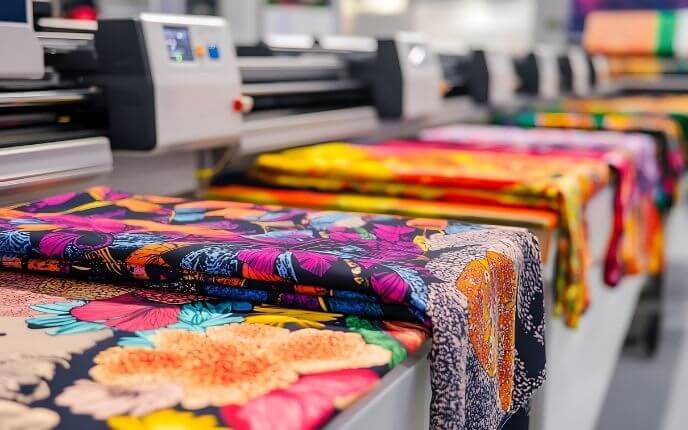
Sublimation is all about science. The process happens when a solid turns directly into a gas, by heating special dyes into polyester fabrics. For t-shirts, this is done through a piece of transfer paper which is then pressed with heat to leave a lasting print.
🎨 Colour and design complexity
Take advantage of all the colours in the rainbow, as this printing method is perfect for colourful designs.
🔗 Fabric compatibility
This printing method only works with synthetic fabrics, such as 100% polyester. It is not an option for cotton t-shirts.
Overall impressions
- Best for: Print on a large area or the whole item in vivid colour options
- Limitations: Works best on light coloured synthetic fabrics (not cotton)
Direct-to-Film (DTF)
Direct-to-film (DTF) is a digital design method that prints an image onto a PET film. Easily print intricate logos or designs in multiple colours for a bright and impactful design. Ultimately, it is a versatile branding method for every occasion.
How it works
The design is printed onto a special film. Then the design is directly transferred to the t-shirt through heat and a special adhesive powder.
🎨 Colour and design complexity
Can easily use a lot of colours and detailed designs as this is a digital print method. Choose a colourful logo or motif with fine details without losing quality.
🔗 Fabric compatibility
Works on most fabrics including; cotton, nylon, polyester, blends, fleece.
Overall impressions
- Best for: Full-colour printing on most fabric types. Intricate designs and multiple colours.
- Limitations: Might feel stiffer or plastic-like due to the film
Screen print
For companies wanting to create bold and impressive designs, then consider choosing screen printing. Also known as silkscreen printing, screen printing is perfect for durable designs. Select this option when ordering bulk amounts to help save on set up costs.
How it works
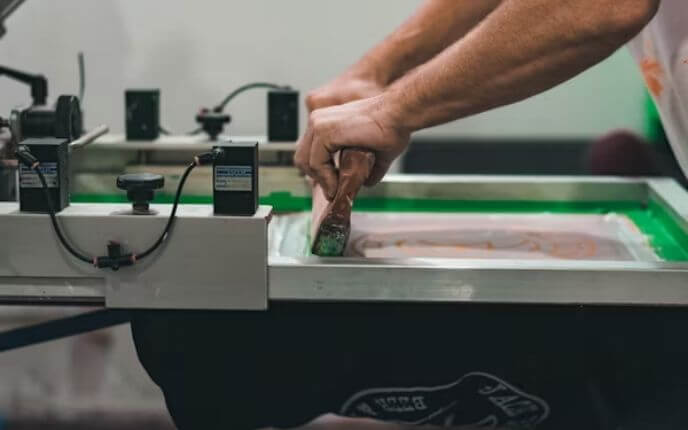
Screen printing is done by forcing ink through a stencil on a mesh screen. The design is then transferred onto the t-shirt once a squeegee is used to push the link through the open area of the stencil layer by layer.
🎨 Colour and design complexity
For the best results, choose this method for simpler methods and fewer colours, up to five.
🔗 Fabric compatibility
Works best with cotton and cotton blends, so long as the fabric is mostly cotton.
Overall impressions
- Best for: Works best on cotton shirts to create vibrant designs
- Limitations: Choose a simpler design and fewer colours for the best result
Transfer print
Create memorable designs in a variety of colours, especially when branding t-shirts with company or employee names. This durable branding method is also very flexible, making each bulk order an easy process.
How it works
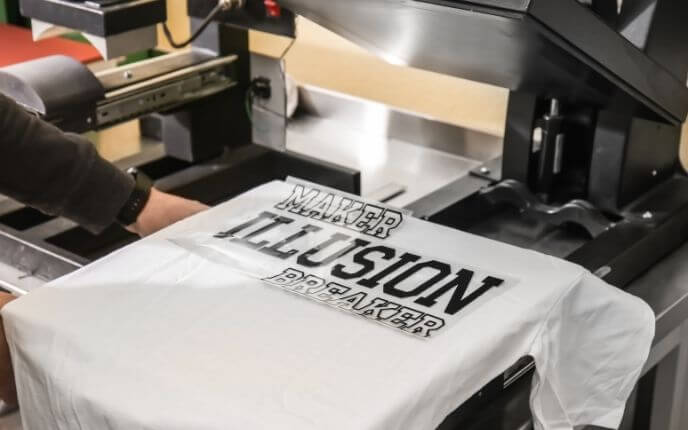
The logo or design is printed on film or paper, then heat and pressure are applied to transfer the design to the final t-shirt or product.
🎨 Colour and design complexity
This option allows for a full range of colours to be printed on the shirt. As for the logo or design, it works best for small customisations such as names, job titles, or company names. Avoid intricate or realistic designs.
🔗 Fabric compatibility
Transfer printing works on most fabric types, including cotton and blends, with synthetics depending.
Overall impressions
- Best for: Long-lasting designs, with a glossy or textured finish, that are fully customisable
- Limitations: Stick to more simplistic designs with less detail