From idea to icon: how to create a business logo people remember
Want to start or build a business? Then a unique logo for the brand is absolutely essential. This article answers the most important questions about creating logos that will be remembered for a long time.
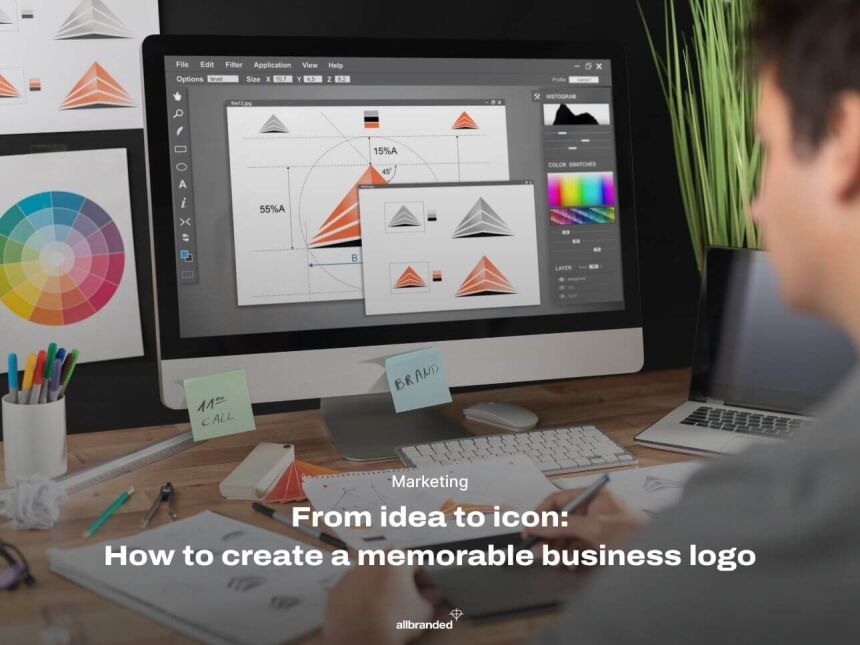
A logo lays the foundation for a business plan and future success. It is the symbol that represents the company and its values to the public. Whether on a website, flyers, social media posts, or business cards, the logo is the first thing the target audience looks for. A unique logo helps establish the brand in the minds of (potential) customers for the long term. A logo has to make a statement. Therefore, it is important to take time when creating a trademark and to find helpful answers to the most important questions about logo design in the following paragraphs.
- What makes a good logo?
- How big should a logo be?
- How is a logo created?
- Can a logo be created with GIMP?
- If a logo cannot be created in-house, who can create one?
- How can it be determined if a logo is trade marked?
- How can a logo be trade marked?
- How much does a trade mark cost?
- In conclusion
What makes a good logo?
A good company logo represents the brand and its values. At first glance, it evokes positive emotions that are appropriate for the company. These feelings might include calm, serenity, hope, fun, or even inspiration. Only then can the target audience remember the company symbol in the future. The logo’s unique design must be timeless. It is also important that the company logo can be adapted to specific file formats or occasions.
A good logo:
Is easy to remember 🧠
The logo must be firmly anchored in the minds of the target audience. This only happens if it is simple and easy to understand. If the company name is rather long, that does not mean the company logo has to be. The logo can also be a symbol, a word, or even just the company’s initials. The choice of design elements, such as colours or fonts, should be kept limited to ensure it is memorable both quickly and in the long term.
Represents the brand’s values 👍
Previously defined goals, standards, and values must be reflected in the logo. Therefore, shapes, colours, and lettering should embody the brand. For example, if the brand stands for rest and relaxation, calming colours such as blue, green, pink, or white are recommended.
Is individually customisable 🔧
Logos are displayed across various channels. The company logo should therefore be available in different versions. This includes CMYK colours, spot colours, and also black and white. For certain occasions throughout the year, such as Pride Month, the colours of the logo may need to be adjusted. This is only possible if the logo design allows sufficient flexibility.
Is timeless ♾️
Short-term trends should be avoided, as the brand should still be effective in ten years. Avoid choosing something too modern or in-the-moment, as this might date the logo in the future.
Has a unique design ✨
With the multitude of logos worldwide, a brand must stand out. A logo should not be confused with any other on the market. It must remain distinctive and competitive to build an emotional connection with the target audience and differentiate from competitors.
Evokes emotions 🎭
A good logo creates emotions and associations in the target audience. Potential customers should be able to identify with the logo and the brand behind it. This builds a strong bond with the company, which ultimately has a positive impact on sales.
A great way to evoke emotions is through colour. Take a deeper dive into the colour psychology of branding. Learn which colours evoke which emotions. Creating and world building through colour is crucial for every brand.
Is simple in design ✅
While that does not mean the logo should be boring, the logo should be simple and easy enough to replicate. In a modern digital world, the logo should also not be so complex that it has difficulty rendering on a website. This is especially true for mobile users, as complex logos can become difficult to read on a mobile device.
How big should a logo be?
There is no single answer to this. The size depends on where the logo will be used. For websites, for example, PNG files with a minimum pixel size of 1024 × 1024 are recommended for square logos. Many content management tools automatically adjust the logo size. For social media, a square format with a minimum size of 200 × 200 pixels is usually required. The key factor is that the logo is easily legible and does not appear pixelated.
How is a logo created?
Once the company name, slogan, and brand values have been defined, the design phase begins. Using various design elements, initial drafts can be created with tools such as Adobe Illustrator or Adobe Photoshop. The final step in logo creation involves testing. This allows analysis of a (small) sample to determine which design best represents the brand.
Here are the five steps for logo creation in detail:
- Company name and slogan: A company name and a memorable slogan are essential. Both may appear in the final logo, possibly in an abbreviated form.
- Brand values: What defines the brand? What values and goals does it pursue? For example, if the brand represents adventure, action, or experience, these characteristics should be reflected in the logo.
- Design elements: Appropriate design elements should be chosen to reflect the brand’s values. This includes colours, fonts, symbols, text elements, and shapes. Each element can evoke an emotion. For example, horizontal lines are associated with calm and serenity, while curved lines create a sense of movement. Every design element should align with the brand.
- Design drafts: Once there is a rough idea of the logo, creation can begin. Image editing software such as Adobe Illustrator, Adobe Photoshop, GIMP, or Canva can be used. Alternatively, online logo editors such as logomaster.ai, flinq, or Online Logo Maker can be used without prior design experience.
- Logo evaluation & testing: More than one logo design should be created initially. This allows testing with a sample of the target market. Surveys can be used to determine which design is most memorable or what emotions a particular logo evokes. These analyses can be carried out independently or with tools such as SurveyMonkey, Jotform, or Appinio.
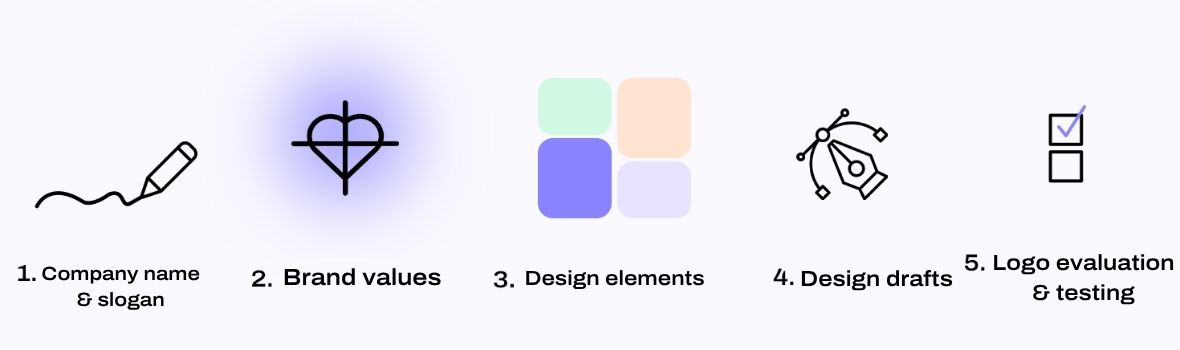 Logo creation process | © allbranded Design
Can a logo be created with GIMP?
Yes. For those who do not wish to spend money on paid tools, GIMP offers a simple alternative for creating a logo. With its wide range of tools, different backgrounds and effects can be created, and text can be added and customised. Numerous tutorials are available online to guide users through logo creation in GIMP. However, it is important to have a sketch or rough idea beforehand, as GIMP does not rely on pre-made design templates.
If a logo cannot be created in-house, who can create one?
If there is no in-house expertise for logo design, professional designers can help. One of the most popular and cost-effective options is to use online tools. These platforms allow users to choose from a wide range of pre-made logos after entering company details such as name, slogan, industry, and design preferences. The suggested logos can then be customised further. Alternatively, logo templates can be selected and adapted as needed. A recommended option is the partner tool logomaster.ai, which enables logo creation without design knowledge.
How can it be determined if a logo is trade marked?
Check the official UK Intellectual Property Office (UK IPO) to determine whether a logo is already protected and may be used.
When creating a logo, it is essential to respect the trade mark rights of others. This requires thorough research. The UK IPO provides a free database for this purpose. It allows users to check whether a planned logo infringes on existing rights. Creating a logo entirely from scratch without referencing others reduces the risk of copyright infringement. If necessary, legal advice should be sought, as using a protected logo can result in significant fines.
How can a logo be trade marked?
A logo can be registered as a trade mark, or the company name can be registered as a logo through the UK IPO. This provides protection from unauthorised use for the first ten years, with the option to extend this period every ten years. The owner then has exclusive rights to use the logo and can take legal action if it is used without permission.
Not only can a logo be registered for a trade mark, but also:
- Words
- Sounds
- Colours
- Any combination of these
How much does a trade mark cost?
The registration of a trade mark will cost at least £170 (as of publication). Depending on the circumstances, this total cost can be more. Some circumstances to increase the cost include the number of goods or services that need to be protected under the brand registration.
In conclusion
For founders, creating a logo can be a complex process. That is why it is important to take sufficient time during the design phase. Often, the best ideas emerge after several days or even weeks. Thanks to numerous online tools, logos can now be created without prior design experience. Regardless of the chosen approach, testing the logo is strongly recommended, as it provides valuable insight into its potential success.
Make your logo stand out on these products